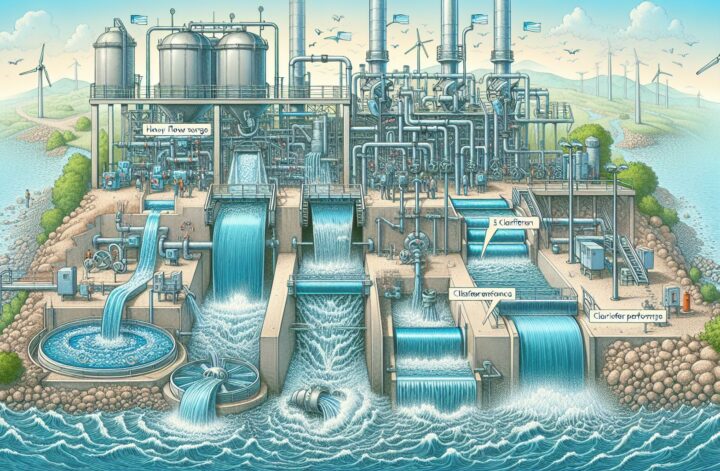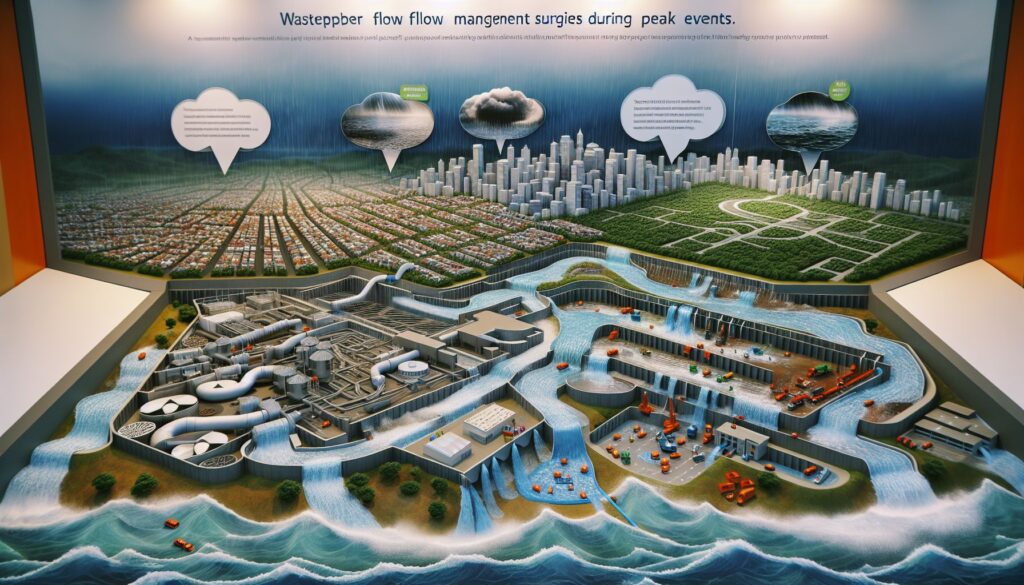
Wastewater treatment plants must account for unpredictable events that increase flow rates. These high-load events, such as heavy rains or industrial disposal, can stress the system beyond its capacity. This, in turn, may degrade the quality of treatment and cause operational issues including excess wear on equipment, safety risks, and potential violations of regulatory standards. This article discusses strategies for managing wastewater flows during peak events, considering real-world challenges and potential outcomes.
Understanding Flow Variability
Flow variability in a wastewater treatment plant can be influenced by numerous factors. These may include climate conditions, industrial activity, community growth, and infrastructure aging among others.
During extreme weather events, such as heavy rains or snow melts, a significant increase in sewage volume enters the plant. This influx, often referred as inflow and infiltration, can quickly exceed the plant’s designed capacity, resulting in reduced treatment efficiency or even overflow.
Industrial and commercial activities might also contribute to peak flow events. A sudden surge in production could lead to dramatic increases in the wastewater being discharged.
Finally, continuous expansion of the served population and deterioriation of infrastructures can also challenge the plant’s capacity. Aging infrastructures often lead to more infiltration, while community growth leads to increased wastewater generation.
Access reliable data on these influences and understanding their interactions can aid in the development of effective wastewater flow management strategies.
System Capacity Upgrade
One obvious solution to handling peak flow events is upgrading the system’s capacity. This could involve expansions or upgrades like the addition of larger pipes, increased storage capacity, or additional treatment units.
However, these solutions often require significant capital investment and long implementation timelines. Furthermore, enhancing the system’s capacity to accommodate rare peak events may not be economical, considering that high capacity systems tend to be underutilized during normal operations.
Flow Equalization
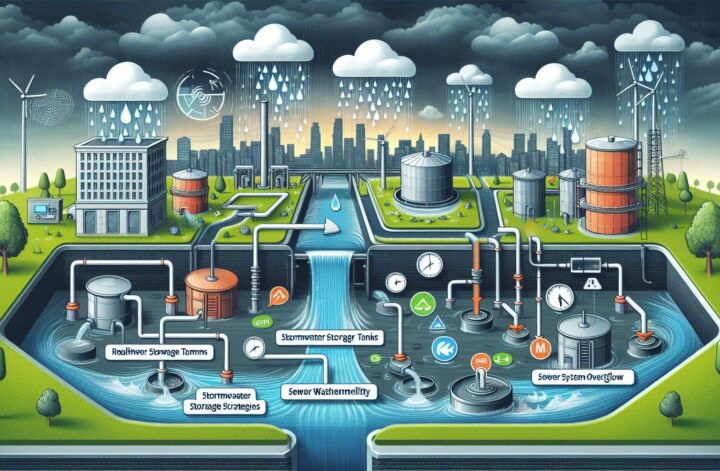
Flow equalization is another effective strategy for managing peak events. The process involves storing excess water during peak times and gradually releasing it back into the system during off-peak periods.
This method can reduce the size and cost of downstream processing facilities because they no longer need to be designed for peak flow conditions. Instead, a constant flow is maintained, which optimizes operations and improves the overall efficiency of the wastewater treatment plant.
Real-time Control Systems
Modern technology now allows for the implementation of real-time control systems in wastewater treatment plants. These systems use sensors to monitor flow rates and adjust operations accordingly.
Real-time control needs advanced data processing and dynamic modeling, supported by reliable telecommunication networks. While this approach requires initial investments in technology and training, it can significantly reduce operational costs and improve the plant’s resilience to peak events.
For more insights, the U.S. Environmental Protection Agency provides valuable resources about the use of sensors and models in improving water quality.
Planning, Education and Collaboration
Effective wastewater flow management during peak events is not just about technical solutions. It also involves community planning, education and collaboration.
Planning should account for potential influences on flow variability. For instance, managing land development to mitigate runoff and stormwater inflow can be an effective measure.
Educating the community about proper disposal habits can reduce improper discharges that lead to system overloads. Businesses also play a crucial role, especially those that generate significant wastewater.
Finally, the collaboration with institutions, such as the local government, stakeholders and universities, is vital. For example, Stanford University’s Sustainable Water Solutions Initiative offers compelling collaboration and research opportunities for sustainable water solutions.
Conclusion
In conclusion, flow variability and peak events present serious challenges for wastewater treatment facilities. However, through a combination of improved understanding, capacity upgrade, flow equalization, real-time control, and community collaboration, these challenges can be managed and mitigated.
While some strategies require significant capital investment, others can be achieved with minimal cost, emphasizing the value of data analysis, community education and collaboration alongside technology. Each wastewater treatment plant will need to evaluate these strategies based on its unique needs and context. The optimal solution will likely be multifaceted, uniting several of these strategies for the most effective wastewater flow management.